
BA in Early Years Education
Early Years Education (0–12 years) – Information for students
formerly: Early-years education and care (0–12 years)
We’ve got a new name!
From 1 October 2026, BEKI will become Childhood Education!
The practically-oriented degree programme for early years educators at Hochschule München
The bachelor's degree in Early Years Education is aimed at state-recognised early years practitioners who wish to deepen and broaden their knowledge of early years education through academic credit transfer. Thanks to the blanket academic credit transfer of your completed training, you will enter the programme directly into the fourth semester. The Department of Applied Social Sciences offers a further qualification programme that is ideally suited as a degree in early years education or a course for educational professionals.
On this page, you will find all the key information relating to your degree programme: course structure, examinations, internship, field trips and key points of contact.
News about the Early Years Education degree programme


Information and course organisation
Upon successfully completing the degree programme for educational professionals, graduates will be able to work as highly qualified professionals in out-of-school educational and childcare settings. To this end, they will acquire the following abilities in particular:
- Initiating, supporting, monitoring, documenting, reflecting on and evaluating inclusive educational processes for children
- Leadership and management of educational and childcare institutions
- Counselling and working with families
- Social-spatial networking & interface management
- Evaluation and quality development of educational processes
- Research-oriented, conceptual work
The bachelor's degree programme in Early Years Education leads to the academic qualification: Bachelor of Arts (BA). This is accompanied by the award of the state-recognised professional title of Early Years Educator. This opens up opportunities in the following fields of work, for example:
- Childcare centres (management and operational responsibilities, specialist advice, specialisation, e.g. in inclusion or child protection)
- Initial and continuing professional development (lecturers, teachers at vocational colleges)
- Early intervention
- Early intervention
- Outreach work with children and young people
- Outpatient and inpatient educational support
Regulations on Qualifications for Teaching at Technical Colleges
The degree programme for educational professionals provides academically sound content for working in out-of-school educational institutions.
A state-recognised vocational qualification as a nursery teacher, as well as a higher education entrance qualification, are prerequisites for admission to the nursery teacher training programme. The training receives academic credit transfer for 2.5 semesters (75 credit points), meaning that the degree programme begins in the winter semester with the fourth standard semester. The degree programme and the module plan are structured over 7 semesters, so that a total of 210 credit points are earned upon completion of the bachelor's degree. The bachelor's degree thus forms the basis for potential further qualification through a Master’s programme.
To this end, before commencing the 4th semester from mid-September each year, students must have completed additional modules (known as ‘bridging courses’) totalling 15 credit points (see ‘Bridging courses’ for further details).
As a rule, modules take place between Wednesday and Friday in both the winter and summer semesters, provided that the programme’s organisation allows for this. Block days or online events may also take place.
The curriculum is divided into the following four module areas:
- Scientific Principles
- Organisation and Management
- Values and standards
- Professional practice in the field of education and child-rearing
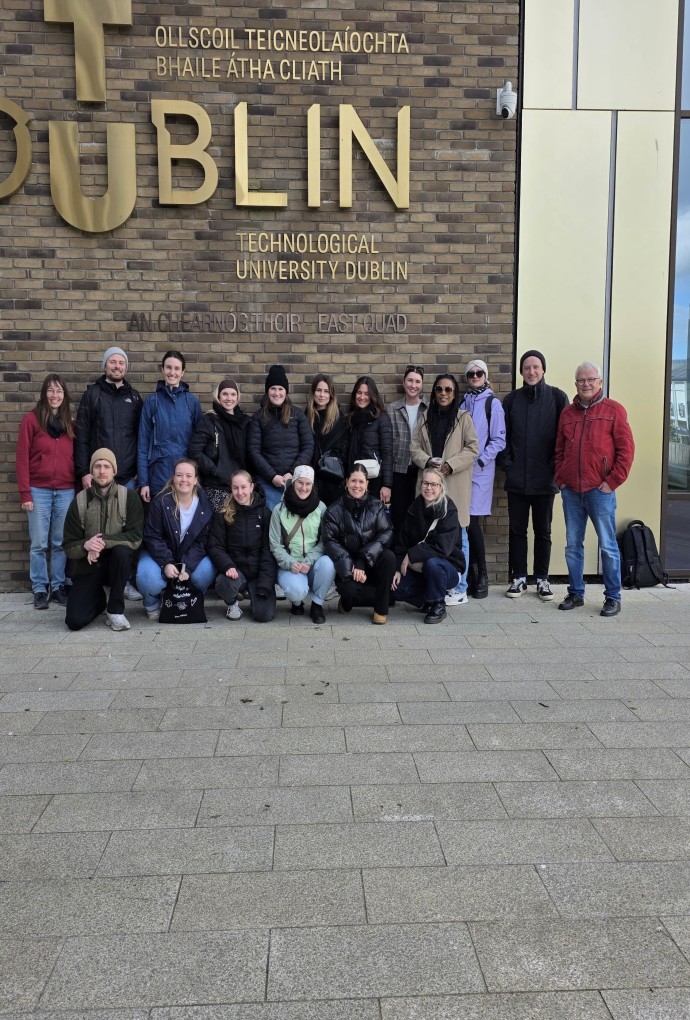
In the 7th semester of the degree programme, the module ‘Scientific Foundations IV: Education and Upbringing in a European and International Context’ includes, in addition to classroom-based teaching, a one-week study trip to another European country (Switzerland, Italy, Austria, Ireland, Finland, Sweden, Wales …). The study trip broadens the perspective of the early years education degree programme through international comparisons.
By visiting practical settings, service providers, professional associations, a university or college, or local training and further education organisations, and through work shadowing, workshops and discussions, students gain an in-depth insight. This not only enables them to reflect on structural issues within an education and childcare system, but also to scrutinise their own professional practice, their own view of the child and their professional approach to shaping educational processes.
The course for early years educators begins, as a mandatory requirement, with the so-called ‘bridge courses’ from mid-September, i.e. before the start of the regular winter semester.
Three bridging courses must be completed:
• Introduction to academic work
• An Introduction to Empirical Social Research
• An introduction to law, with a focus on education and care
From mid-September, the three courses will take place as two-week intensive blocks. The written examination in social research and an oral examination on the introduction to law will also take place during this period. For the gap course on academic writing, a module assignment must be completed during the winter semester.
JFMK resolution on professional titles and state recognition
For certain roles in the social sector, state-recognised qualification as an early years educator is a mandatory requirement for professional employment. State recognition is confirmation of your professional competence to carry out a public-service role as a specialist in the field of education and childcare, in accordance with the relevant Social Code provisions.
State recognition of early years educators is granted on the basis of this Act and the regulations issued by the Bavarian State Government which set out the details of this Act.
The Bachelor’s degree certificate confirms to graduates that, on the basis of the degree they have attained, they are entitled to use the professional title ‘State-recognised early years educator’ in accordance with Article 2(1) of the Bavarian Social Services Act (BaySozBAG).
The Bachelor’s degree certificate also states that, in accordance with Article 2(1)(2) of the Bavarian Social Services Act (BaySozBAG), the professional title may only be used by persons who have not engaged in conduct that would render them unfit to practise the profession, and in particular who have not been convicted by a final judgement of any of the offences specified in Section 72a of Book Eight of the Social Code.
BAG-BEK
DEBEKI
Committee on Early Childhood Education, German Society for Educational Research
German Youth Institute, research project ‘Inclusive Education in Groups’
Successful completion of the Practical Training Semesters is a prerequisite for registering for the Bachelor’s thesis. The Bachelor’s thesis is an academic piece of work completed during the final semester of study and is awarded 12 ECTS credits. The mark for the Bachelor’s thesis is weighted double (whilst the final marks for the modules are weighted simply).
As a general rule, you must register for all assessments during the degree programme for educational professionals. The written and oral examinations take place at the end of the lecture period of the respective semester, within the timeframe set by the examination board of Hochschule München. The results are announced on the specified date at the end of the examination period for the respective semester and can be viewed during the subsequent examination review session and discussed with the lecturer responsible for marking the paper. The marks are then recorded on the overview of marks.
In this feature, Bayerischer Rundfunk follows HM alumna Magdalena, who successfully completed her degree at Hochschule München between 2022 and 2024.
Voices from university life


FAQ on Early Years Education
As an early years educator, you can work primarily in childcare centres – in management roles, for funding bodies or as a specialist adviser.
Other areas of work include, amongst others:
- Early intervention
- Early intervention
- Outreach work with children and young people
- Advice centres
- Education and advanced training, e.g. at specialist colleges for social pedagogy.
The degree programme was developed in collaboration with Bavarian vocational academies, meaning that the early years teacher training covers the first 2.5 semesters. Consequently, academic credit transfer is applied to these for all students.
Yes, you can enrol if you have a German qualification.
Foreign qualifications must first be recognised by the Government of Upper Bavaria.
Information is available from the Bavarian Centre for Family and Social Affairs
Yes. Although the degree programme is a full-time course with weekly face-to-face events, many students work part-time as educational staff. The events usually take place on three days a week (Wednesday to Friday). This leaves time during the week, and there is no compulsory attendance – except for the internship in the 6th semester.
The fixed dates are:
- Exams
- a five-week internship between the 6th and 7th semesters (not with your own employer)
- a one-week field trip in the 7th semester
All dates will be communicated in good time.
Please note: Regulations regarding employment whilst studying (e.g. health insurance) must be checked on a case-by-case basis.
Before the start of the 4th semester, compulsory ‘bridge courses’ take place from mid-September until the start of the semester in October.
They act as a bridge between early years teacher training and the requirements of a degree course.
Contents:
- Introduction to Empirical Social Research (written examination)
- Academic work (module project)
- Law relating to Education and Training (oral examination)
Performance:
- a total of 15 ECTS credits
Exams take place during specified periods, which are published at the start of the semester. Presentations and assignments are arranged individually with lecturers.
Further information:
- https://sw.hm.edu/studierende/rund_um_pruefungen/index.de.html
- https://hm.edu/studium_1/im_studium/mein_studium/verlauf/pruefungen.de.html
Key topics include:
- The circumstances of children and families
- Language support
- pedagogical and professional practice
- Developmental psychology
- Inclusion
- Advice and monitoring
- Children’s rights
- Leadership skills
The degree programme complements existing practical knowledge with scientifically sound, theoretical and empirical perspectives.
The aim is to explore experiences in greater depth, reflect on them and link them to research findings.
An interdisciplinary team comprising:
- Educational Science
- Social and Early Years Education
- Psychology
- Sociology
- Law
The team is complemented by lecturers from the fields of professional practice and research.
In the 6th semester, you will undertake a five-week internship during the lecture-free time.
The aim is to explore new areas of work and to reflect on one’s own professional practice.
Possible facilities:
- Organisations running childcare centres
- Expert advice
- Head of the nursery
- Early intervention
- outpatient educational support
- Early intervention
- Family centres
- Child and Youth Services
- research institutes
The course aims to encourage students to adopt an inquisitive and reflective approach.
In the research project, students work independently in groups and use methods such as:
- Interviews
- Observations
- Surveys
The entire research process – from formulating the research question to the presentation – is covered.
The aim is to combine practical knowledge with academic insights. This is essential for a degree in early years education.
In the 7th semester, there is a one-week field trip to a neighbouring European country.
Through work shadowing placements in various organisations, early years education is examined from an international perspective.
This helps to highlight challenges, differences and similarities, and broadens one’s own perspectives: ideal for a degree programme for early years educators or a degree programme for educational professionals.
Head of Degree Programme

Examination board
Programme Coordination